Urban Cycling Conflict Points Field Infographic
This is a Infographics & Diagrams AI image prompt case, leaning toward 数据叙事, 主题信息图, 精确标注. Copy the full prompt below and paste it into a free GPT image generator to create your own image with GPT Image-2 — swap the subject, brand, or aspect ratio as needed.
English full prompt
Translate clearly explaining the structure, relationships, and actionable cues of “Urban Cycling Conflict Points” into one self-contained image titled “Urban Cycling Conflict Points. ” Build the infographic by asking the image to compress one junction into five-second slices that layer cyclist, pedestrian, and vehicle trajectories composition by composition, allowing cause, time, place, or quantity to follow one unmistakable route. Compress one junction into five-second slices that layer cyclist, pedestrian, and vehicle trajectories image by image. In Urban Cycling Conflict Points, set each variable beside the element it describes: numbers carry sequence, arrows carry direction, scale cues carry magnitude, and tonal steps express relative intensity; omit percentages when no verified quantity is supplied. Present Urban Cycling Conflict Points as three-stage vertical narrative, seen via a near-orthographic eye-level or overhead view with macro explanation only where needed. Render “路口安全读图手册” clearly in the image, minimizing explanation and pointing each individual label to a real object. Maintain a unified color temperature within pine green, rain gray, signal yellow, and paper white, using local value contrast to expose the functional parts of crisp vector lines, matte paper grain, translucent overlays, and a one-to-one legend for Urban Cycling Conflict Points. For Urban Cycling Conflict Points, retain a crisp hero element using the background one level quieter and steady ambient illumination using one key. Add no unrelated surface treatment: align vector edges, arrow endpoints, legend swatches, and translucent overlays precisely. Position type hierarchy readable at mobile-thumbnail size against a dark ground without crushed blacks, producing a clean editorial-infographic finish. Additional control: natural cast shadows using soft edges; silhouettes remove decorative glow. Use negative space opposing dense detail, ensure focus moves from hero element to operation and then outcome, and let the highest-contrast point become the reading entry. Do not let conflicting arrows, mismatched legends, fabricated statistics, dense microtext, or decorative dashboards weaken the subject; reject unrelated interfaces, decorative neon, false data, and imitation of living artists. Return one 4:5 final image without variants or a process sheet. Final art direction: clear information design with a coherent visual route and restrained editorial structure. Use this controlled palette as the dominant visual system: #F2EFE7, #27384B, #6D8F89, #C96A43; preserve believable local material colors within it. Preserve the requested text hierarchy and wording as part of the design, but do not invent extra slogans, pseudo-text, logos, or watermarks. Keep one unmistakable primary subject or information route and one readable visual action. Use disciplined negative space and avoid default perfect symmetry. Physical credibility is mandatory: correct gravity, contact shadows, material thickness, tool weight, joint loading, fabric tension, liquid direction, reflections, scale, and occlusion. Create an original visual with no resemblance to a public figure, copyrighted character, existing campaign, or living artist signature style. No unrelated decorative icons, floating objects, duplicated limbs, plastic gloss, waxy skin, synthetic collage artifacts, or AI watermarks. Return exactly one finished image composed for 4:5; no variants, process sheet, split panels, mockup frame, or contact sheet.
中文完整提示词
把清晰解释「路口安全读图手册」的结构、关系与行动线索转化为一张独立成片,标题为「路口安全读图手册」。
以将路口冲突压缩成五秒时间切片,骑车人、行人和车辆轨迹逐帧叠加搭建整张信息图,因果、时间、空间或数量关系沿一条明确路径展开
将路口冲突压缩成五秒时间切片,骑车人、行人和车辆轨迹逐帧叠加
把「路口安全读图手册」的各项主题变量当场放在对应对象旁:编号承担顺序,箭头承担方向,尺度承担量级,相对色阶只表达强弱;缺少可靠数值时不填造百分比。
以三段纵向叙事构图,按接近正交的平视或俯视图,必要局部用微距示意取景。
画内明确呈现「路口安全读图手册」,说明文字数量从简,所有标签必须指向自然对象。
确保松针绿、雨云灰、信号黄与纸白的同调色温,用局部亮暗突出清晰矢量线、哑光纸纹、半透明叠色与可逐项对应的图例的决定性功能部位。
为「路口安全读图手册」保留核心对象清晰、背景退后一级和稳定的环境光与单一主光;不额外增加物料,重点是矢量边缘、箭头端点、图例色块和半透明叠层保留精确对齐。版面以移动端缩略图仍可辨的字号层级落在暗部不过黑的深色背景,成片呈清爽的编辑信息图质感。补充控制:边缘柔和的自然投影,轮廓不使用装饰性辉光;用留白对比密集细节,焦点先到核心对象,再到操作点,最后落在最终状态,对比最高的位置就是阅读入口。
不要让箭头相互冲突、图例错配、伪统计、密集小字与装饰性仪表盘破坏核心对象,拒绝无关 UI、装饰性霓虹、假数据和在世艺术家模仿。
成片为单张 4:5,不附过程页或变体。
Related cases
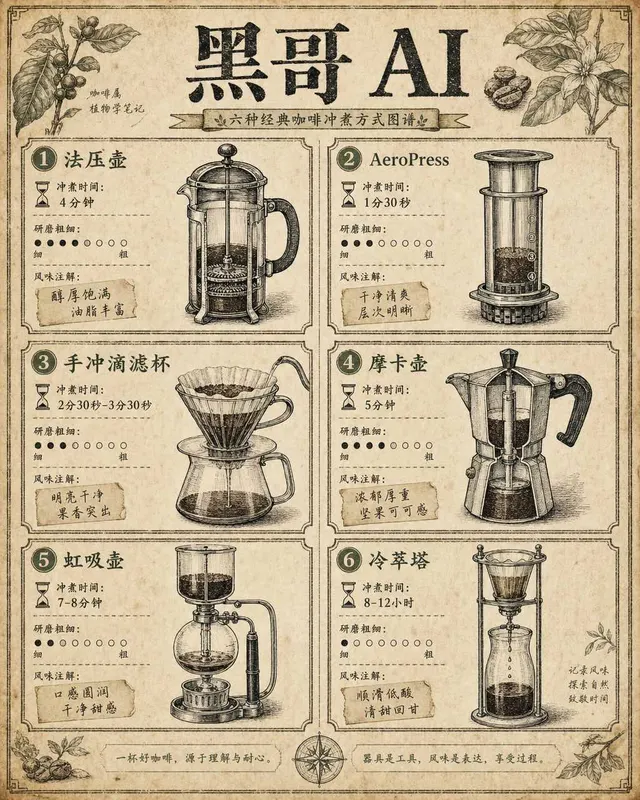
Coffee Brewing Methods Comparison Chart
A vintage-encyclopedia-style infographic comparing six coffee brewing methods arranged in a two-column grid on aged cream paper. Each cell contains a hand-inked cross-section illu…
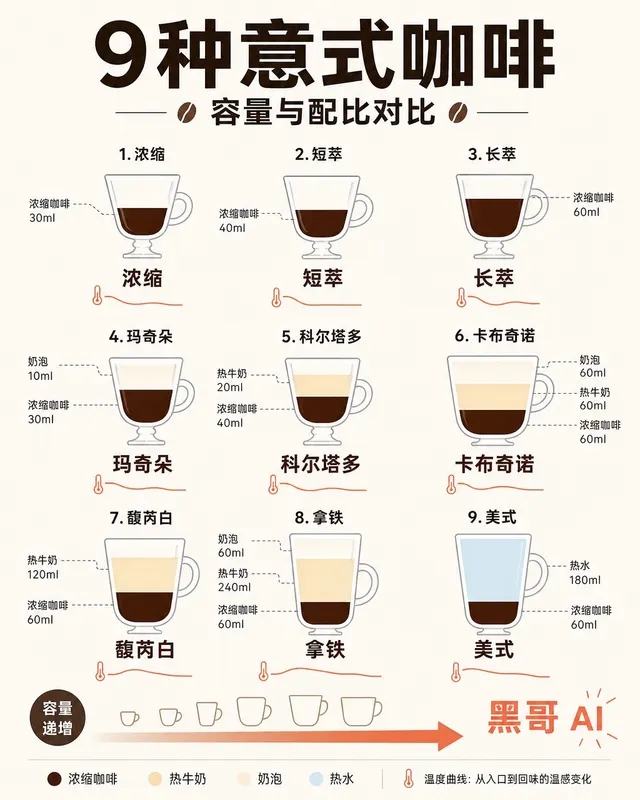
Espresso Drink Ratios Diagram
A clean flat-design infographic illustrating nine espresso-based drinks — espresso, ristretto, lungo, macchiato, cortado, cappuccino, flat white, latte, and americano — as tall ve…
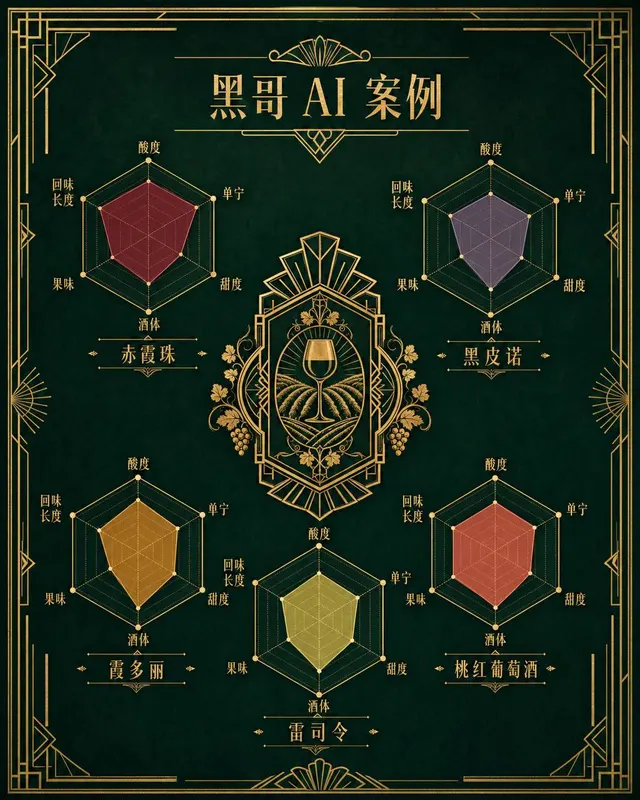
Wine Taste Profile Radar Chart
An art-deco-inspired infographic poster presenting taste-profile radar charts for five classic wines: Cabernet Sauvignon, Pinot Noir, Chardonnay, Riesling, and Rosé. The five hexa…
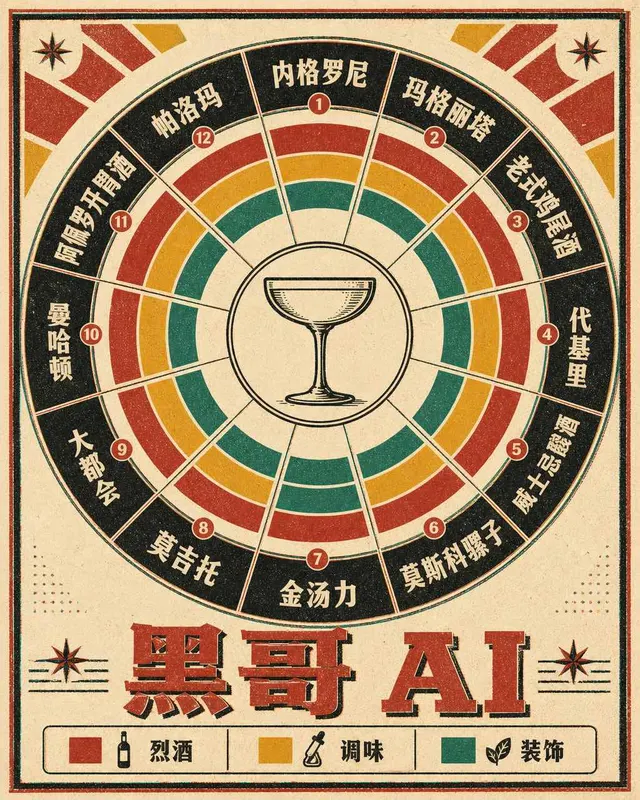
Classic Cocktail Mixing Ratios Wheel
A retro 1960s-style circular infographic — a cocktail mixing ratio wheel — printed on warm ivory card stock with bold offset-printing colors. The wheel is divided into twelve radi…