Liang Chao the Ferry Mechanic Production Character Study
This is a Characters & 3D Toys AI image prompt case, leaning toward 人物设定, 职业现实主义, 制作资料. Copy the full prompt below and paste it into a free GPT image generator to create your own image with GPT Image-2 — swap the subject, brand, or aspect ratio as needed.
English full prompt
Produce a single finished image, “Liang Chao the Ferry Mechanic,” so the viewer immediately understands designing “Liang Chao the Ferry Mechanic” accompanied by coherent professional actions, clothing, and tools. Set the hero view in the authentic workplace, where the character checks motor temperature, old-sail load, and rope wear in an unmanned ferry, then tests an upwind departure. Arrange the tools according to preparation, execution, and final checking. Preserve one face, build, hairstyle, and garment-wear pattern for Liang Chao the Ferry Mechanic across front, side, back, and three-quarter views. Explain Liang Chao the Ferry Mechanic's occupation by means of the hand contact, body weight, and tool resistance involved when the character checks motor temperature, old-sail load, and rope wear in an unmanned ferry, then tests an upwind departure. Add compact studies of the garments, carried objects, and decisive gesture, placing wear only where this work repeatedly grips, flexes, or rubs for Liang Chao the Ferry Mechanic. Frame Liang Chao the Ferry Mechanic as nine-cell rhythm together with a dominant center, seen through a 50mm documentary character view combined together with orthographic turnarounds, keeping face and hands unambiguous. Let “渡口机械师梁潮” be the textual entry point; secondary language cannot substitute for visual explanation. Use pine green, rain gray, signal yellow, and paper white accompanied by natural highlights and contact shadows that prove the scale and weight of working cotton, abrasion-resistant textile, leather, metal implements, and rubber grips appropriate to the occupation. Begin the detail treatment of Liang Chao the Ferry Mechanic by requiring that you set folds and wear in working cotton, abrasion-resistant textile, leather, metal implements, and rubber grips appropriate to the occupation only at genuine load, grip, and friction points. Preserve contact point, tool, and resolved form on one focal plane, apply even diffused overhead light, pair the image with monochrome headline with fine connector labels, and reduce the background to a dark ground without crushed blacks for a production-ready documentary character-sheet finish. Additional control: neutral shadows without crushed blacks; transparent and opaque boundaries stay accurate. Use natural material color supporting one cue color, ensure focus moves from visual anchor to operation and then outcome, and let the accent occupy less than one tenth of the visual anchor area. Exclude face drift between views, unrelated tactical equipment, childlike sexualization, malformed fingers, purposeless glowing parts, or fashion-runway posing; each garment, tool, and environmental object has to belong to the same setting. Return one 3:2 final image without variants or a process sheet. Final art direction: original occupational character portrait, grounded realism with production-ready costume detail. Use this controlled palette as the dominant visual system: #32475B, #D9C6A2, #8A5A44, #E98B4D; preserve believable local material colors within it. Keep any text absent or minimal unless the source brief explicitly requires it; never add logos, signatures, or watermarks. Keep one unmistakable primary subject or information route and one readable visual action. Use disciplined negative space and avoid default perfect symmetry. Physical credibility is mandatory: correct gravity, contact shadows, material thickness, tool weight, joint loading, fabric tension, liquid direction, reflections, scale, and occlusion. Create an original visual with no resemblance to a public figure, copyrighted character, existing campaign, or living artist signature style. No unrelated decorative icons, floating objects, duplicated limbs, plastic gloss, waxy skin, synthetic collage artifacts, or AI watermarks. Return exactly one finished image composed for 3:2; no variants, process sheet, split panels, mockup frame, or contact sheet.
中文完整提示词
创作单张成片《渡口机械师梁潮》,让观者立即理解塑造「渡口机械师梁潮」并说明其职业行为、服装与工具。
主视图发生在自然工作现场:角色在无人渡船机舱检查电机温度、旧帆受力与缆绳磨损,随后测试逆风离岸;工具依照准备、执行、复核的先后排列
确保同一角色的脸型、身材、发型和服装磨损在正面、侧面、背面与三分之四视图完全一致
用「渡口机械师梁潮」在无人渡船机舱检查电机温度、旧帆受力与缆绳磨损,随后测试逆风离岸时的手部接触、身体重心与工具受力解释职业技能;服装结构、随身物件和决定性手势另作紧凑小图,磨损只落在这项工作反复握持、弯折或摩擦的位置。
构图采用九宫格节奏但突出中央单元。
让「渡口机械师梁潮」成为文字入口,次级说明不得替代成片本身的解释。
细节从让职业现场中写实使用的棉布、耐磨织物、皮革、金属工具和橡胶握把只在实际受力、握持和摩擦位置出现褶皱与磨损开始,空间维持接触点、工具和结果处于同一焦平面,照明采用均匀漫射顶光。让「渡口机械师梁潮」配合单色标题配细连接线标注,背景收敛为暗部不过黑的深色背景,整体使用制作级纪实人物设定质感。补充控制:不过黑的中性落影,透明与不透明边界准确;以自然材质色衬托单一提示色,焦点先到核心对象,再到操作点,最后落在结果,局部强调不超过核心对象面积的十分之一。
去掉转面换脸、无关战术装备、幼态性感化、错误手指、用途不明的发光件与时装秀姿态,并让每件人物服装、工具和环境物件都属于同一场景,用于「渡口机械师梁潮」。
成片为单张 3:2,不附过程页或变体。
Related cases
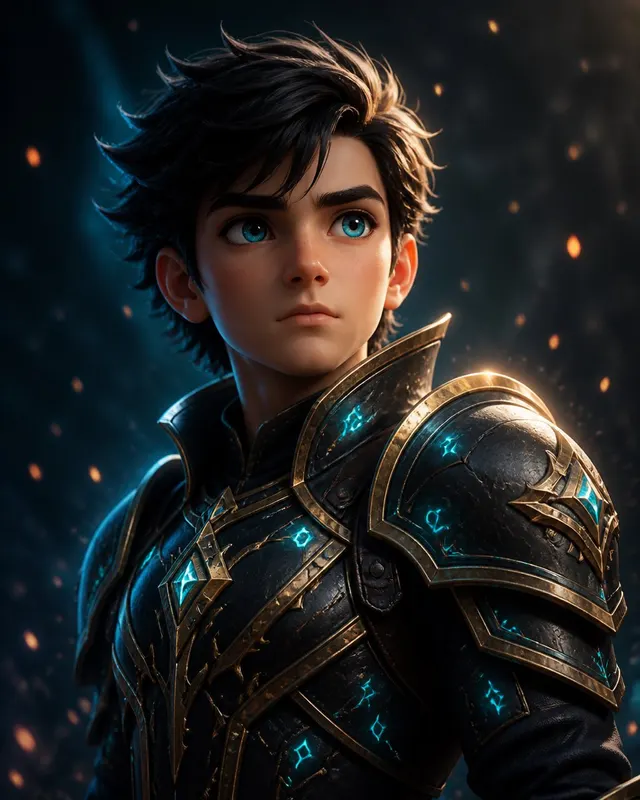
Stylized 3D Hero Portrait
A stylised 3D character portrait of an original fantasy hero rendered with oversized expressive eyes and soft sub-surface scattering on smooth porcelain-like skin. The character s…
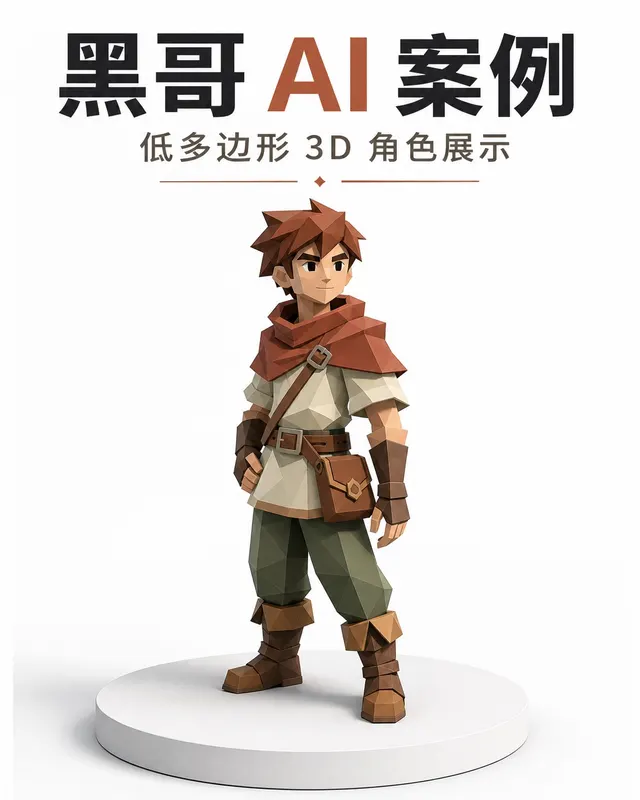
Low-Poly Game Character Idle Pose
A low-polygon 3D game character standing in a relaxed idle pose, centred on a clean white turntable platform. The character is a young adventurer with a triangulated face of no mo…
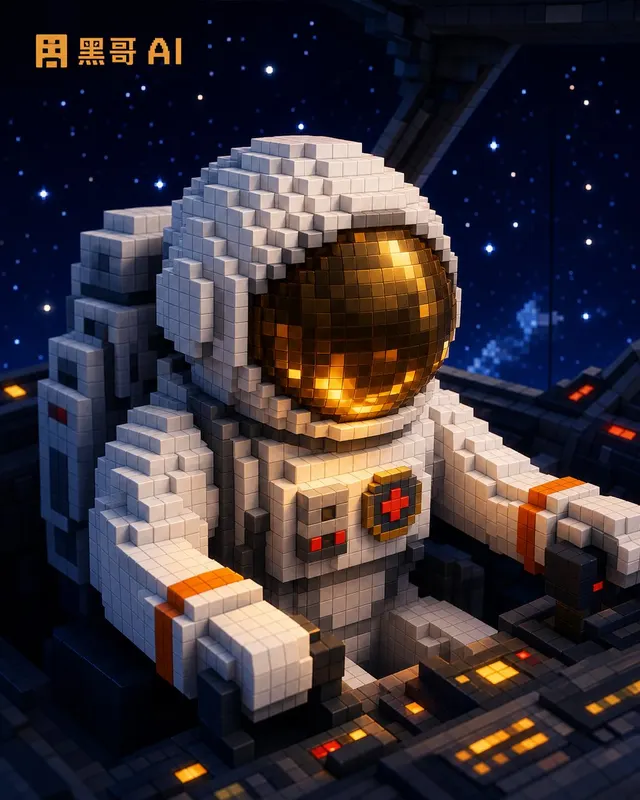
Voxel Cube Space Pilot
A fully voxel-art 3D space pilot character built from uniform coloured cubes, rendered in a slight isometric perspective. The pilot wears a blocky white pressure suit with a spher…
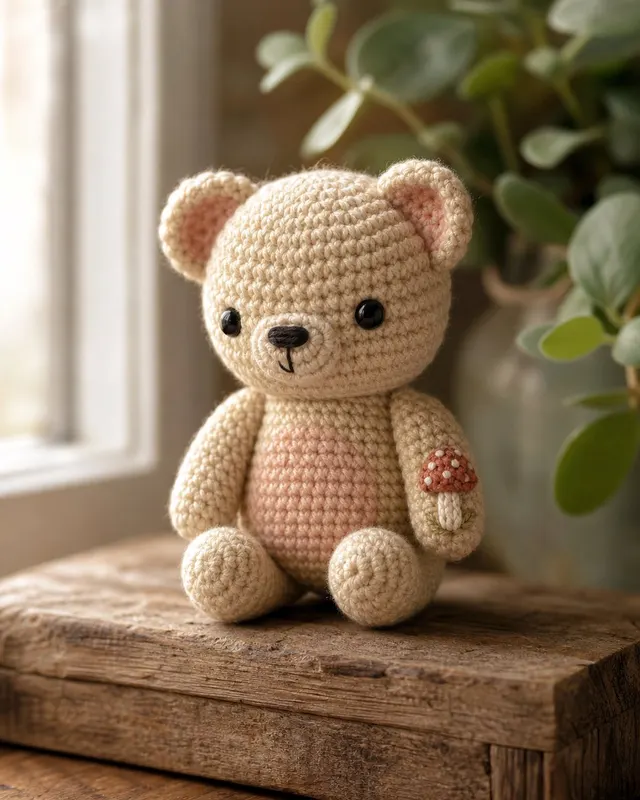
Knitted Amigurumi Forest Bear
A close-up product photograph of a handmade amigurumi crochet bear plush sitting upright on a weathered oak shelf. The bear is about 12 cm tall with a round head, tiny safety-pin…