博物馆展柜湿度员:湿度升高后换入干燥盒
这是一个「人像摄影」类别的 AI 生图提示词案例,风格偏向纪实摄影、自然光、湿痕流向、含水表面、稳定站姿和工具接触。复制下方完整提示词,打开免费 GPT 生图工具粘贴,即可用 GPT Image-2 免费出图,并可替换主体、品牌名与画幅。
中文完整提示词
主体为博物馆展柜湿度员,位于闭馆前的博物馆展厅,正在湿度升高后换入干燥盒,记录玻璃角落结露范围。比例定为 3:2,视线通过半身侧逆光肖像,焦点落在正在工作的双手,面部位于同一景深范围而非虚化背景贴图抵达手部与工作物件的接触处。最终图像作为地方田野观察季刊封面。画面语言为真实环境摄影,保留自然皮肤、磨损表面与空气透视;镜头焦点紧随手部动作,背景层次由现场光线自然形成,重点是湿痕流向、含水表面、稳定站姿和工具接触。光线与配色:炭黑、旧纸米色、氧化铜绿和低亮朱红;阴天侧光说明湿度与表面起伏,水面高光不过曝。动作阅读顺序:动作分层:前景清楚呈现「湿度升高后换入干燥盒」,中景以「记录玻璃角落结露范围」交代结果,两层之间不插入其他事件。看清「博物馆展柜湿度员」「湿度升高后换入干燥盒」与「记录玻璃角落结露范围」;场所仍为「闭馆前的博物馆展厅」,不用摄影棚或抽象背景。文字仅按画面完全无字,不出现数字、品牌、签名或水印处理。动作相关材质:液体流向、湿痕和冷凝遵循重力与温差;纸张和薄片呈现折痕、湿度卷边与真实厚度。排除塑料皮肤、漂浮工具、错误接触阴影、复制人群和伪签名。
English full prompt
At a museum gallery shortly before closing, museum-case humidity keeper performs this action: replaces a desiccant case after humidity rises and records condensation at the glass corner. Use a 3:2 frame with a half-body backlit portrait focused on working hands, with the face in the same depth range rather than pasted over a blurred background. Create a cover for a local field-observation journal. Present the scene through environmental photography preserving natural skin, worn surfaces, and atmospheric depth; focus follows the hand action while location lighting creates the background layers naturally, ensuring wet-mark direction, moisture-bearing surfaces, stable stance, and tool contact across subject and setting. Use only this color-light system: charcoal, aged-paper beige, oxidized copper green, and low-luminance vermilion; overcast side light reveals humidity and surface relief without blowing water highlights. Expand only this action: Keep the full action “replaces a desiccant case after humidity rises and records condensation at the glass corner” in one continuous plane, with its contact point and result both visible. The readable chain is “museum-case humidity keeper” to “replaces a desiccant case after humidity rises and records” to “replaces a desiccant case after humidity rises and records,” all grounded in “a museum gallery shortly before closing”. Typography: place no text, numerals, brands, signatures, or watermarks anywhere. Treat the main working objects as follows: liquid flow, wet marks, and condensation follow gravity and temperature difference; paper and sheet material show folds, humidity curl, and real thickness. Also apply this exclusion: Exclude plastic skin, floating tools, wrong contact shadows, cloned people, and false signatures. Final art direction: environmental documentary photography, natural skin and worn working surfaces. Use this controlled palette as the dominant visual system: #39505E, #E9E3D5, #B58A42, #D85B37; preserve believable local material colors within it. Keep any text absent or minimal unless the source brief explicitly requires it; never add logos, signatures, or watermarks. Keep one unmistakable primary subject or information route and one readable visual action. Use disciplined negative space and avoid default perfect symmetry. Physical credibility is mandatory: correct gravity, contact shadows, material thickness, tool weight, joint loading, fabric tension, liquid direction, reflections, scale, and occlusion. Create an original visual with no resemblance to a public figure, copyrighted character, existing campaign, or living artist signature style. No unrelated decorative icons, floating objects, duplicated limbs, plastic gloss, waxy skin, synthetic collage artifacts, or AI watermarks. Return exactly one finished image composed for 3:2; no variants, process sheet, split panels, mockup frame, or contact sheet.
相关案例
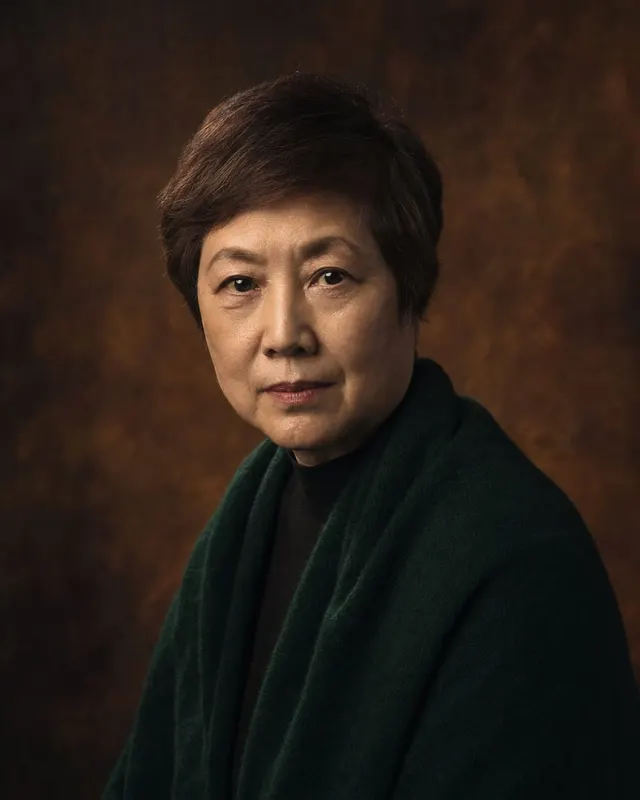
伦勃朗单人头像
生成一张 4:5 竖版伦勃朗单人头像。中国 60 岁左右女性,深棕短发,穿墨绿色羊毛披肩和黑色上衣,坐在暖棕手绘布背景前,身体微微转向左侧,眼睛看向镜头。主光从左上方打出清晰但柔和的伦勃朗三角光,右侧阴影保留细节,背景有油画般的暖棕纹理。真实棚拍肖像,85mm 镜头,肩颈以上构图,皮肤纹理自然,脸部...
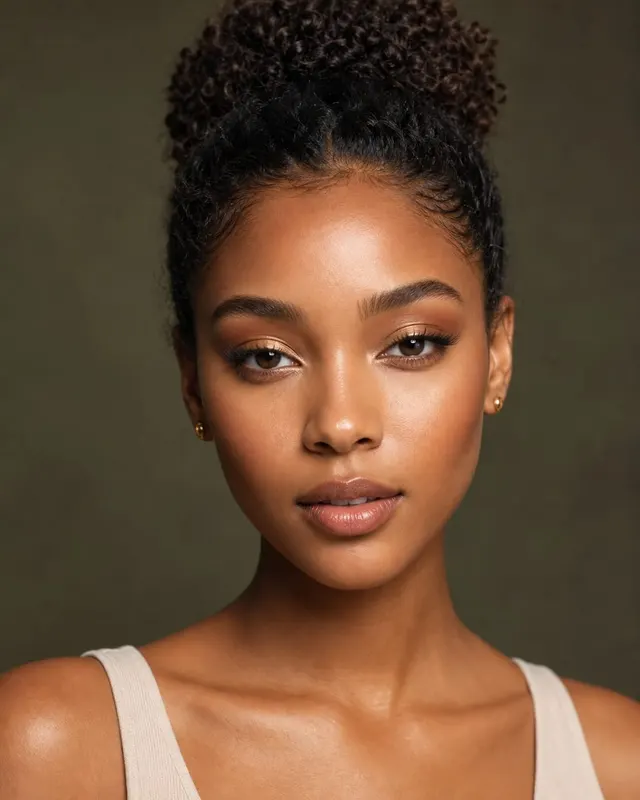
蝴蝶光美妆特写
生成一张 4:5 竖版蝴蝶光美妆特写。主体是一位年轻黑人女性模特的头肩部特写,面部比例自然,五官清晰,真实皮肤质感,眼神平静自信。灯光使用经典蝴蝶光:正前上方柔光在鼻下形成细小对称阴影,颧骨和额头有柔和高光。背景为深橄榄绿色到暖灰色摄影棚背景,妆容为高级商业美妆:细腻底妆、金棕眼影、自然唇色和轻微高...
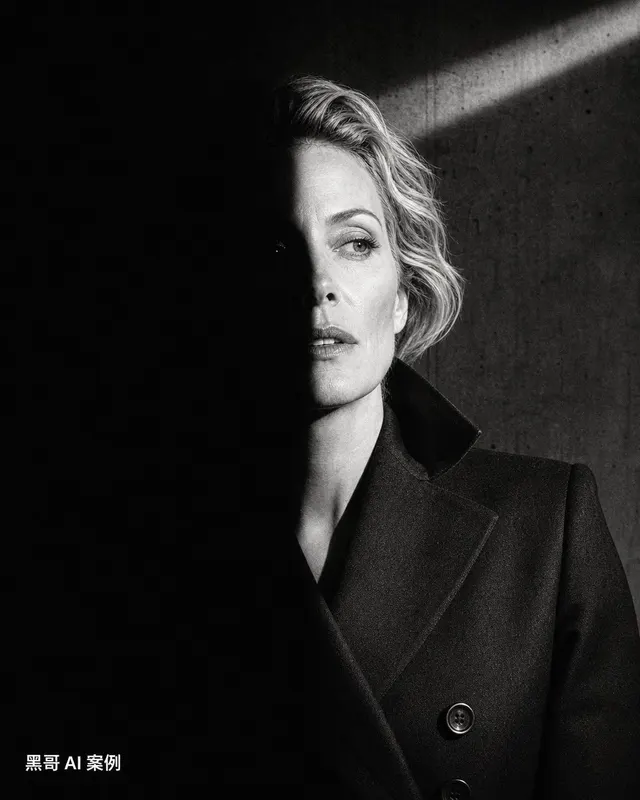
黑色电影分割光人物研究
一张戏剧性黑白棚拍肖像,主角为 40 岁白人女性,面部轮廓分明,采用经典黑色电影分割光布光。一只硬光菲涅耳聚光灯置于画面右侧 90 度,沿鼻梁将脸部精准分成两半——一半全亮,另一半绝对黑暗。她略将面部转向光源,使暗侧虹膜刚好捕捉一线镜面高光。无补光,暗侧归为纯黑。她身穿有结构感的深炭色双排扣西装外套,领子翻起。表情冷…
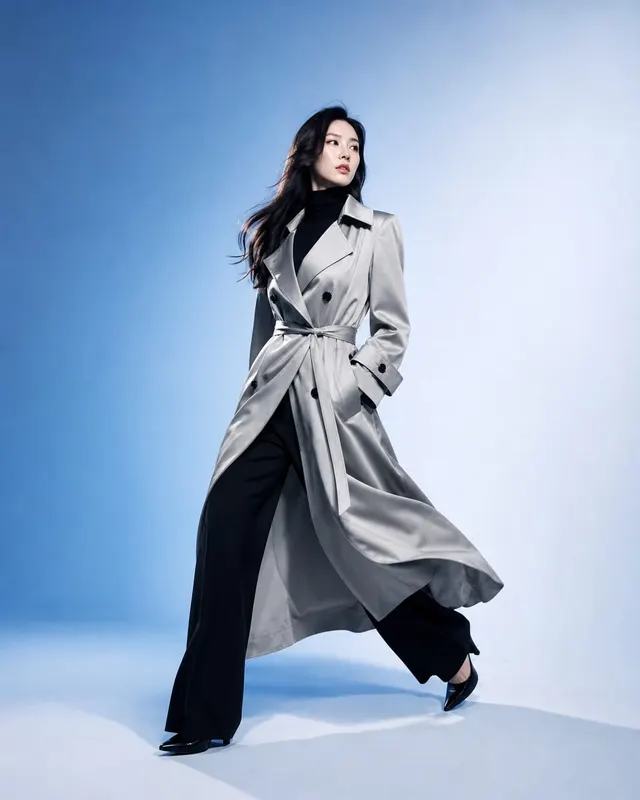
白色无缝背景时尚大片
生成一张 4:5 竖版白色无缝背景时尚大片。中国女性时装模特站在大型影棚弧形无缝纸背景前,背景为浅钴蓝到白色的干净渐变,穿结构感银灰长风衣和黑色高领内搭,做夸张但优雅的跨步姿态,外套下摆有运动感。全身构图,脚到头完整可见,地面与背景无缝连接。灯光为大面积柔光加左侧窄边缘光,影子干净。色调为浅钴蓝、银...